
Standard Throw Projectors for Classrooms: Uses, Pros & Cons
A standard throw projector classroom setup has long been a reliable and cost-effective choice for schools. Designed to project a large image from several metres away, these projectors are ideal for traditional classrooms with fixed desk layouts.
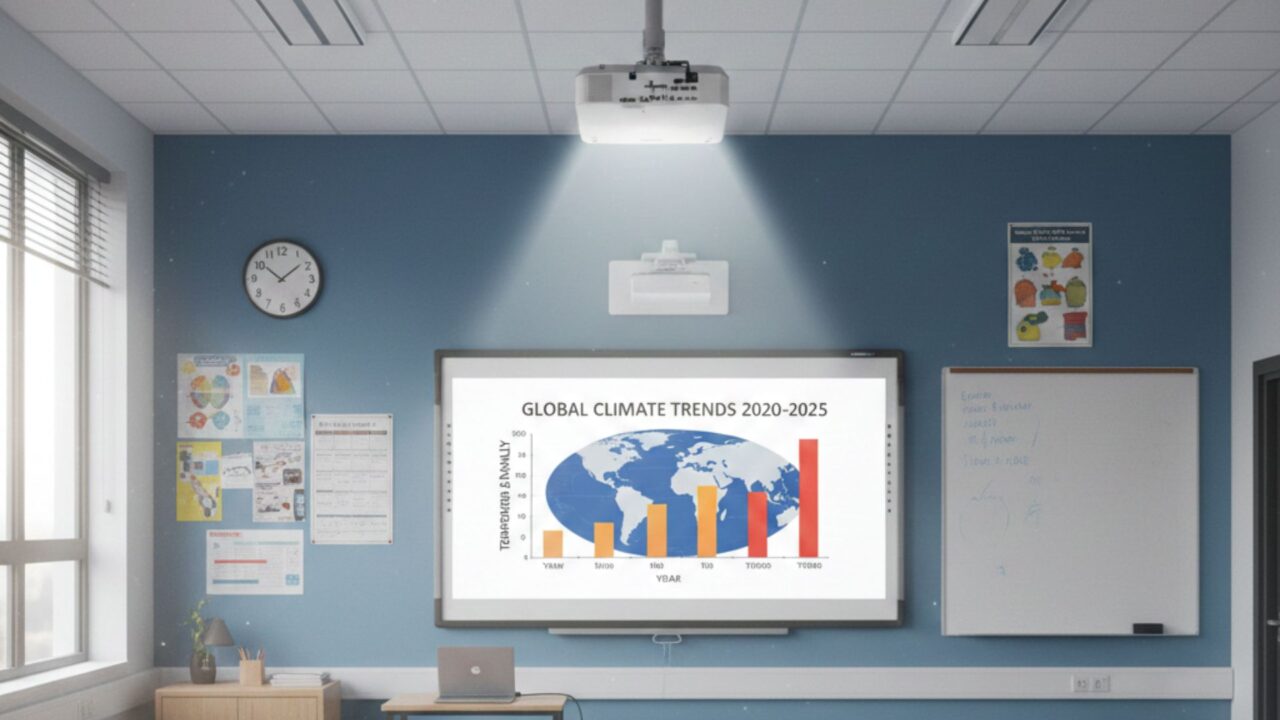
Because of the longer throw distance, a standard throw classroom projector for schools is typically mounted on the ceiling. This keeps the projector out of reach, but it can require more installation planning compared with wall-mounted short and ultra-short throw models.
One key advantage of standard throw projectors is screen size flexibility. With optical zoom and adequate throw distance, many education models can comfortably scale from around 60 inches up to 300 inches. This makes them suitable not only for typical classrooms, but also for larger spaces such as lecture rooms, multipurpose areas, and halls.
Where Standard Throw Projectors Work Best
Standard throw projectors are effective in:
- Larger classrooms or lecture-style spaces
- Multipurpose rooms and halls
- Rooms with glass or limited wall space
- Situations where a pull-down or motorised screen is required
- Schools seeking a cost-effective, reliable projection solution
Advantages
- Flexible mounting options for ceilings
- Wide range of brightness levels and resolutions
- Easy maintenance and long-lasting technology
- Trusted, widely used in education
Disadvantages and Limitations
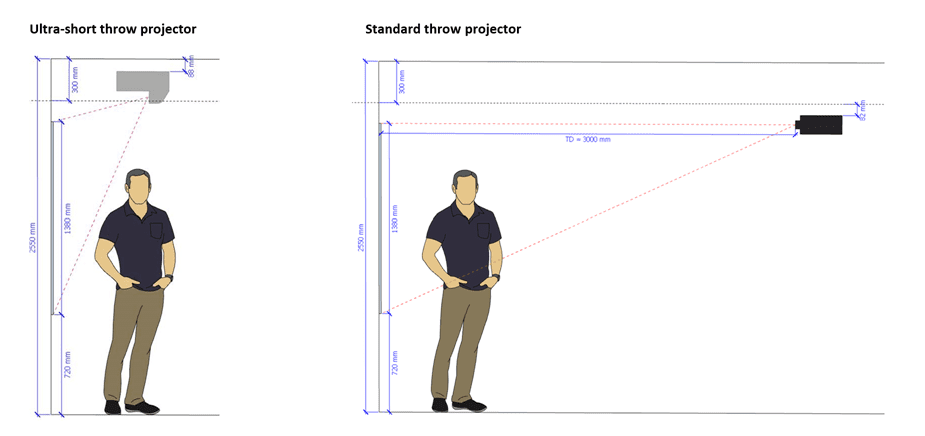
Because they project from a longer distance, standard throw classroom projectors can cast shadows if teachers stand in front of the image. Bright rooms may require higher lumen models image clarity. Installation can be more involved, with longer cable runs for power and video, and access equipment like taller ladders, scaffolding or longer drop poles needed for installation and maintenance. These installation requirements make standard throw harder to install and can add costs to the installation even if the projector is cheaper to buy than alternatives such as ultra shorts.
Modern Classroom Trends
In recent years, many schools have started adopting ultra-short-throw projectors. These models allow teachers to stand closer to the board without casting shadows and are particularly suited for collaborative or interactive learning spaces. While standard throw projectors remain effective for traditional classrooms, the shift reflects how modern classrooms are evolving to prioritize interactivity, flexible learning layouts, and more compact technology.
Conclusion
A standard throw projector for education can still be effective in the right environment, particularly in larger rooms, multipurpose spaces, or architecturally challenging areas where wall mounting isn’t practical. They are also commonly selected in lower-cost upgrades or like-for-like replacements, especially when an older ceiling-mounted system is already in place and budgets are tight. Reusing existing mounts, cabling, and infrastructure can help schools reduce installation costs.
However, these savings often come with trade-offs, including more complex installation and shadowing. For everyday classroom use, many schools now have the option to use ultra-short-throw options for improved usability and flexibility.
Planning a classroom AV installation? See our classroom AV installation services.
Phone: (03) 9457 4800
Email: info@dibaustralia.com.au