
Short-Throw Projectors for Classrooms: When Schools Should Use Them
What Is a Short-Throw Classroom Projector?
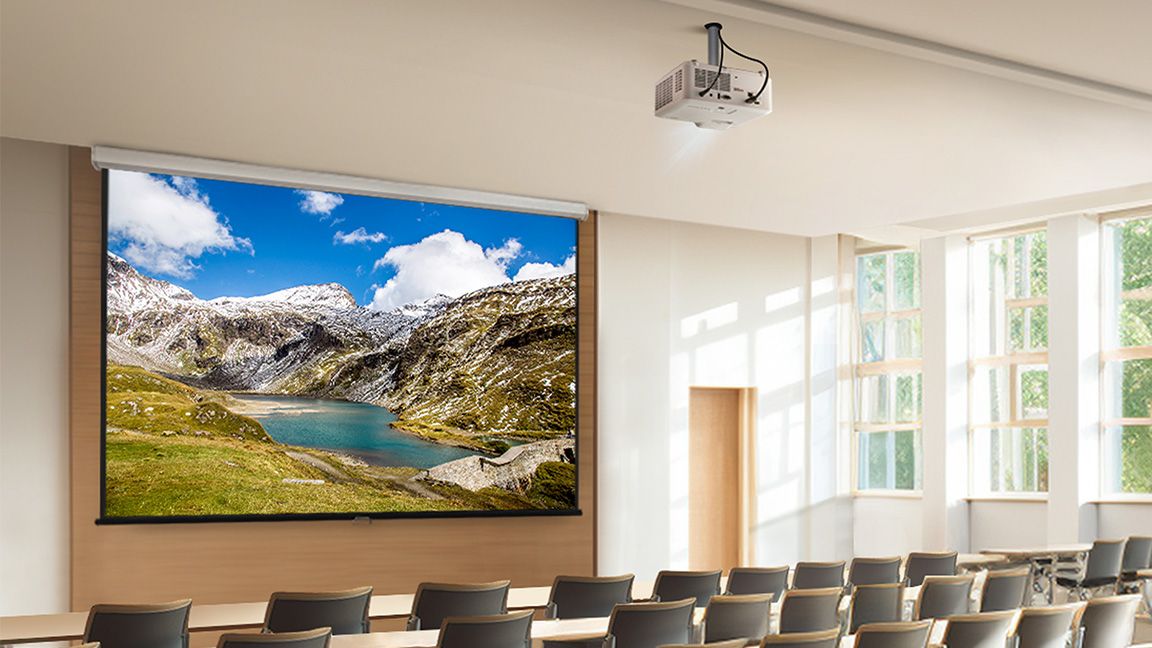
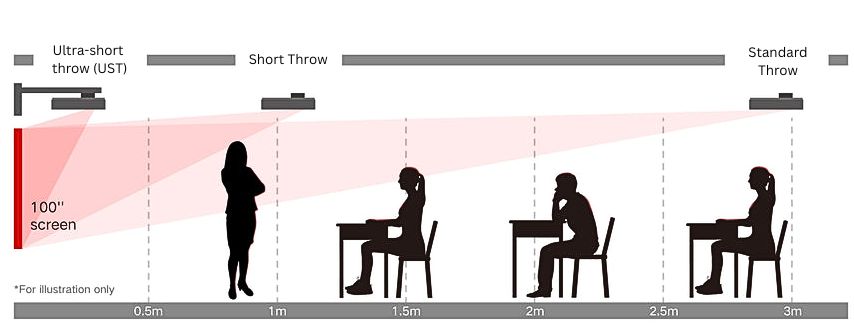
A short throw classroom projector produces a large, bright image from a shorter mounting distance than traditional models. Installed closer to the screen or whiteboard, it helps reduce shadows, minimise glare, and improve sightlines for teachers and students alike.
Short throw projectors for schools were once a popular middle-ground between standard and ultra-short-throw systems. Today, however, they are used less frequently, with fewer models available, as many manufacturers and schools have shifted toward ultra-short-throw projectors that offer even closer placement and greater shadow reduction. Even so, short throw can still be a practical solution in the right classroom settings.
Pros: Classroom Short Throw Projector Benefits
Reduced shadows and glare
Teachers can present comfortably without blocking the image or looking directly into the light. This not only improves teacher comfort but also ensures students remain focused, with fewer visual distractions at the front of the room.
Better fit for smaller rooms
Short throw models require less depth to create a large display, making them well suited to compact classrooms and retrofit spaces. Students benefit from consistently clear visibility of text-heavy or detailed material, even from the back of the room.
Flexible installation options
They can be ceiling, wall, or just placed on the teacher’s table, giving schools more freedom when working around existing infrastructure, while still keeping content visible at optimal angles for students.
Simpler maintenance and cabling
Shorter cable runs and closer mounting positions make installation and servicing easier for IT staff, reducing disruption to classroom schedules.
Modern connectivity
Many education-focused models include wireless presentation, network control, and remote management tools, which allow teachers to interact with digital content more naturally and engage students more effectively.
Cons: Where Short Throw May Fall Short
Limited scalability for larger spaces
Bigger rooms may require standard throw or higher-lumen systems to maintain image size and clarity, especially for students seated further away.
Surface and screen limitations
Short throw and ultra-short-throw projectors rely on a very flat, stable projection surface. Even minor wall imperfections, ripples, or screen movement can cause visible distortion, focus issues, or uneven geometry, which can affect readability for students across the room.
They also don’t pair well with drop-down or retractable screens. Because these projectors are mounted close to the whiteboard or wall, there is often no practical way to position a pull-down screen above the teaching surface without interfering with the projection path or blocking usable board space.
For best results, schools should plan for a fixed, flat surface and consider the whiteboard material and finish to ensure consistent image quality and long-term performance.
Reduced market availability
With many classrooms now adopting ultra-short-throw technology, fewer short throw models are available. This can limit choice and long-term upgrade paths, making ultra-short-throw systems a more future-ready investment for some schools.
Not always the most future-ready option
As classrooms adopt interactive and front-of-room teaching styles, many schools find ultra-short-throw systems provide better long-term flexibility and near-total shadow reduction.
Learn More: Common Classroom Projector Mistakes Schools Make (And How to Avoid Them)
When Schools Should Choose Short-Throw Projectors
A short throw classroom projector is often the right choice when:
- Classroom depth is limited
- Teachers present close to the screen
- Shadow reduction is important
- Students require consistent, clear visibility from all seating positions
- A straightforward, cost-effective upgrade is required
- Budget is a key consideration, as short throw models are often more affordable than ultra-short-throw alternatives
For schools looking for a practical, lower-cost replacement for aging standard projectors, short throw can provide improved visibility and reduced shadows without the higher investment typically associated with ultra-short-throw or fully interactive systems.
How Ultra-Short-Throw Compares
While short throw offers clear improvements over traditional projection, ultra-short-throw projectors sit even closer to the display surface and can provide additional advantages for classrooms:
- Near-elimination of shadows and glare, giving teachers more freedom to move and interact with content
- Improved safety and comfort, with less light shining toward the eyes of the teacher during lessons
- Enhanced student engagement, with fewer distractions and more immersive visuals
- Support for interactive or touch-enabled learning, enabling more collaborative activities
- Cleaner front-of-room installations with minimal ceiling hardware and consistent image performance in tight spaces
For many schools upgrading learning walls or planning long-term technology investments, ultra-short-throw systems often deliver the most seamless experience for both teachers and students.
Planning a Classroom Upgrade? Start with Expert Guidance
Choosing between standard, short throw, and ultra-short-throw projectors depends on room size, teaching style, and long-term technology plans. Taking the time to assess placement, brightness, and future needs can help schools avoid costly changes later.
If you’re unsure which setup is right for your space, our team at D.I.B Audio Visual can help assess your classrooms and recommend a practical, future-ready solution. Our specialists work with schools across Victoria to design projection systems that are reliable, easy to maintain, and suited to everyday teaching.
Planning a classroom AV installation?
Phone: (03) 9457 4800
Email: info@dibaustralia.com.au