

What Is HDBaseT? Why Schools and Workplaces Use It for Reliable Long-Distance AV
What Is HDBaseT?
Behind many reliable lecture theatres, auditoriums, boardrooms and other large presentation spaces is a technology that most people never see: HDBaseT.
Modern AV systems often need to connect projectors, displays, cameras and control equipment that are located many metres apart. However, technologies such as HDMI and USB have practical distance limitations, particularly when transmitting high-resolution content such as 4K video.
HDBaseT was developed to solve this challenge by extending these signals over a single Cat5e, Cat6 or Cat6A cable while maintaining reliable performance over longer distances.
In addition to video and audio, HDBaseT can also transport USB, Ethernet, control signals and, on compatible equipment, power. This makes it one of the most widely used signal transmission technologies in professional AV installations.
How Does HDBaseT Work?
One of HDBaseT’s defining features is a capability known as 5Play, which enables multiple services to be transmitted over a single category cable, including:
- Video and audio for projectors, displays and presentation systems
- Ethernet for network connectivity on compatible devices
- Control signals such as RS-232 and infrared (IR) for managing AV equipment
- USB data on supported devices, enabling peripherals such as cameras and touch displays
- Power on compatible equipment, reducing the need for additional power supplies in some installations
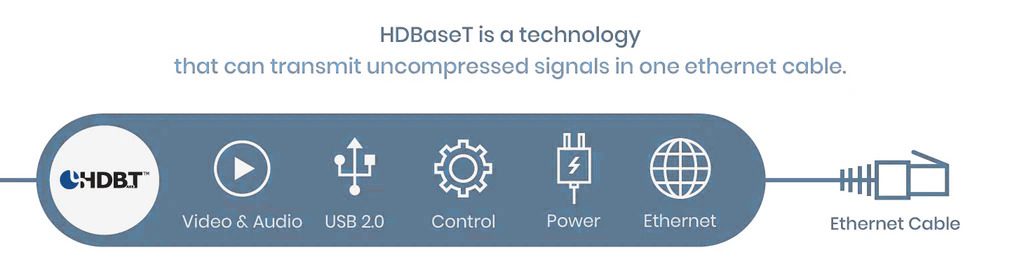
In a typical AV installation, an HDBaseT transmitter connects to the source equipment, such as a presentation PC, wireless presentation system or video conferencing device. The transmitter sends these signals over a single Cat5e, Cat6 or Cat6A cable to an HDBaseT receiver connected to the display. Some professional projectors and displays even include a built-in HDBaseT receiver, reducing the amount of additional hardware required.
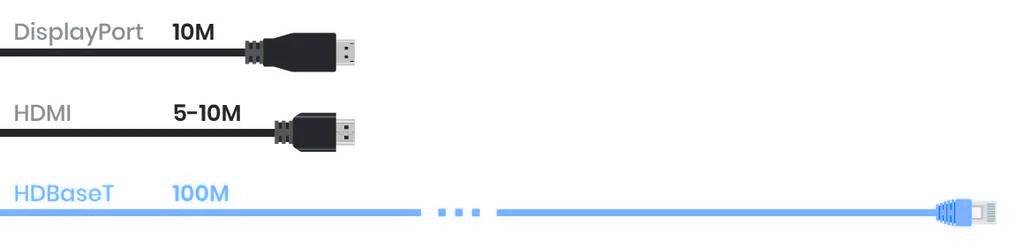
Depending on the equipment and cable used, HDBaseT can reliably extend these signals up to 100 metres, making it well suited to larger learning spaces, lecture theatres, auditoriums, boardrooms and other environments where standard HDMI or USB connections may not be practical.
Why Use HDBaseT Instead of HDMI?
HDMI is designed for connecting nearby devices, making it ideal for televisions, desktop monitors and small meeting spaces.
However, as cable runs become longer, HDMI signals become increasingly difficult to transmit reliably, particularly when carrying high-resolution content such as 4K video. USB connections have similar distance limitations.
As display resolutions increase, preserving image quality becomes increasingly important, particularly when presenting detailed content such as spreadsheets, engineering drawings, CAD files and fine text.

In larger learning spaces, lecture theatres, auditoriums, boardrooms and presentation spaces, the distance between source equipment and displays can quickly exceed the practical limits of standard HDMI or USB connections.
HDBaseT is designed to extend these signals over structured cabling, providing reliable signal transmission over distances of up to 100 metres, depending on the equipment and cable used. This is particularly valuable in larger spaces, where the practical transmission limits of HDMI and USB can make reliable signal delivery more challenging over longer cable runs.
Some of the key advantages include:
- Reliable AV signal transmission over distances of up to 100 metres*
- Support for high-resolution video and audio
- Support for USB, Ethernet and control signals
- Simplified AV infrastructure
- Reliable performance for professional AV installations
- A cost-effective solution for many point-to-point AV systems
The differences between HDMI and HDBaseT are summarised below:
| Feature | HDMI | HDBaseT |
| Primary Use | Connecting nearby devices | Long-distance AV signal transmission |
| Typical Distance | Short cable runs | Up to 100 metres* |
| Cable Type | HDMI cable | Cat5e, Cat6 or Cat6A |
| Carries | Video and audio | Video, audio, USB, Ethernet, control and power (on compatible equipment) |
| Best Suited For | TVs, monitors and desktop setups | Schools, workplaces and larger presentation spaces |
*Actual transmission distance depends on the equipment and cable used.
Where Is HDBaseT Commonly Used?
HDBaseT is commonly used in environments where AV equipment is installed some distance from displays or projectors, including:
- Lecture theatres
- School halls
- Gymnasiums
- Auditoriums
- Performing arts centres
- Boardrooms
- Training rooms
- Specialist learning spaces
In these environments, HDBaseT provides reliable long-distance signal transmission while simplifying AV infrastructure for installation, maintenance and future upgrades.
HDBaseT in Action
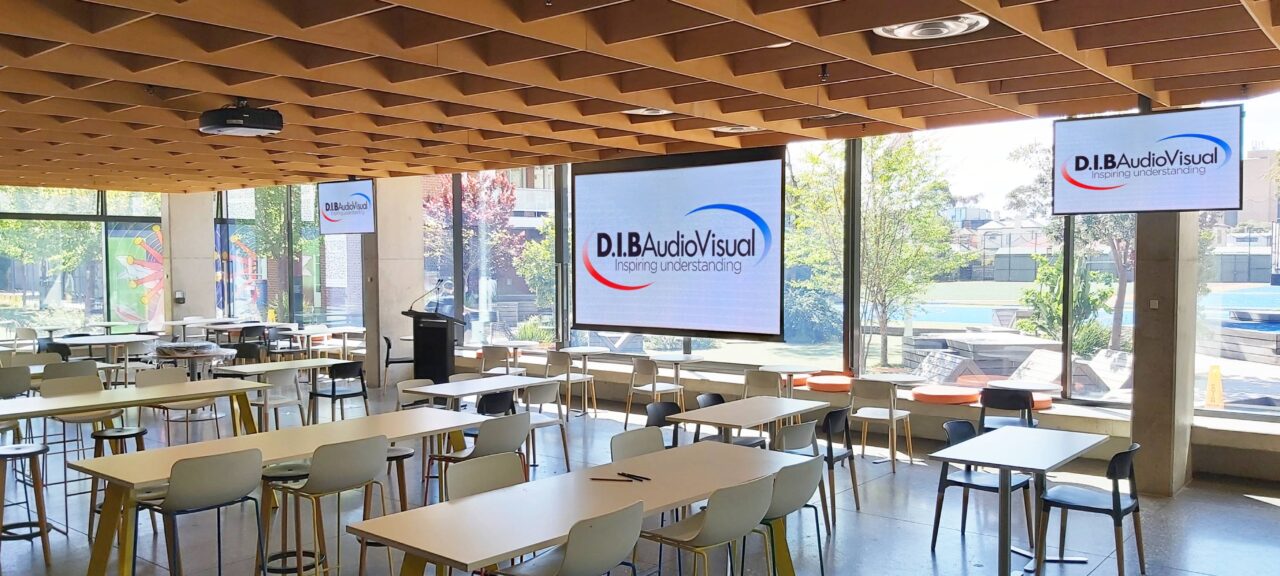
A good example of HDBaseT in practice is St Michael’s Grammar School, where D.I.B Audio Visual delivered an AV solution for the school’s Atrium.
The installation combines extended-range HDBaseT with NDI (Network Device Interface). Within the Atrium, HDBaseT provides reliable long-distance signal transmission between AV equipment, while NDI enables camera feeds and other content to be distributed across the wider campus.
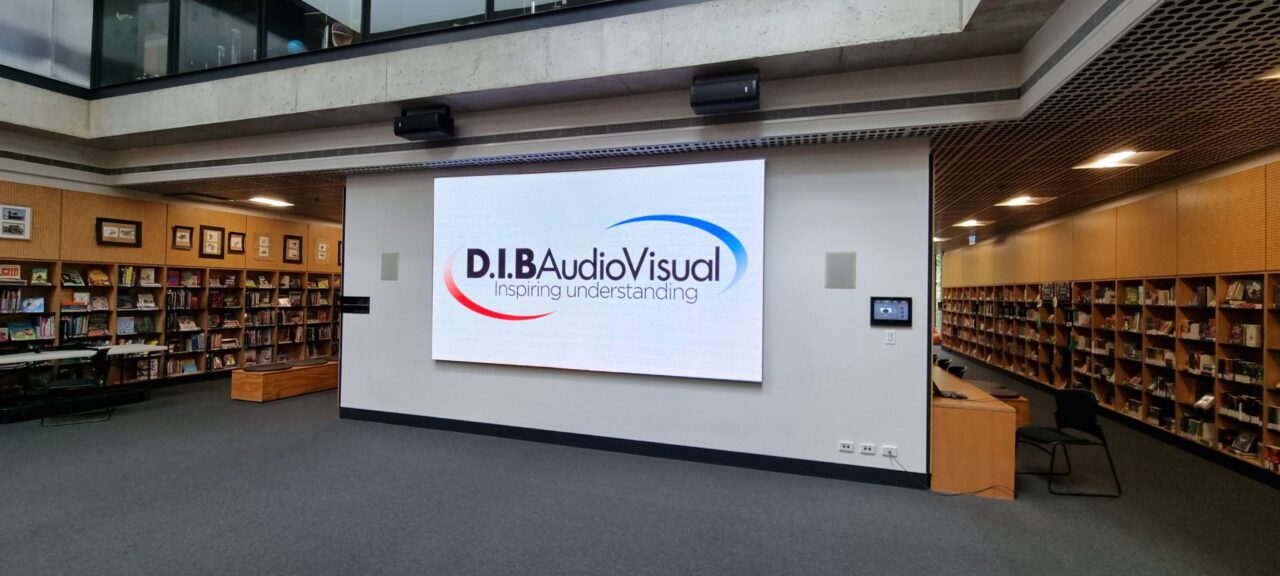
This project also illustrates that HDBaseT and AV over IP are not simply competing technologies. Depending on the application, they can be used independently or together to deliver the best outcome.
Why HDBaseT Continues to Be Widely Used
HDBaseT remains one of the most widely adopted signal transmission technologies in professional AV because it addresses a common challenge: extending HDMI, USB and control signals reliably over longer distances.
For many education and workplace projects, it provides an effective balance of performance, simplicity and cost, making it an excellent choice for point-to-point AV connections.
Larger AV systems with many inputs, outputs and flexible content routing requirements may be better suited to AV over IP. However, for many installations, HDBaseT continues to provide a dependable and cost-effective solution.
Choosing the right technology ultimately depends on the size, complexity and long-term goals of the project.
Need Help Planning Your AV Infrastructure?
Every learning and working environment has unique AV requirements. Choosing the right signal transmission technology depends on factors such as room size, equipment locations, system complexity, scalability and future expansion plans.
For more than 27 years, D.I.B Audio Visual has designed, installed and supported professional AV solutions for schools and workplaces across Victoria. Our experienced team can help determine whether HDBaseT, AV over IP or another AV signal distribution technology is the right fit for your project.
To discuss your next AV project, contact D.I.B Audio Visual at info@dibaustralia.com.au or call 03 9457 4800.