

Panasonic’s New Direct-View LED Wall: A Practical Approach to Video Wall Upgrades
For schools, offices and other professional environments, a video wall can provide a large, highly visible canvas for presentations, collaboration, information displays and digital content. But as an existing video wall ages, replacing it can raise practical questions: Can the current mounting system be reused? How much infrastructure needs to change? Will servicing require significant disruption? And does moving to LED mean adding another layer of processing equipment?
Panasonic’s new Direct-View LED (DvLED) wall takes a practical approach to these considerations.
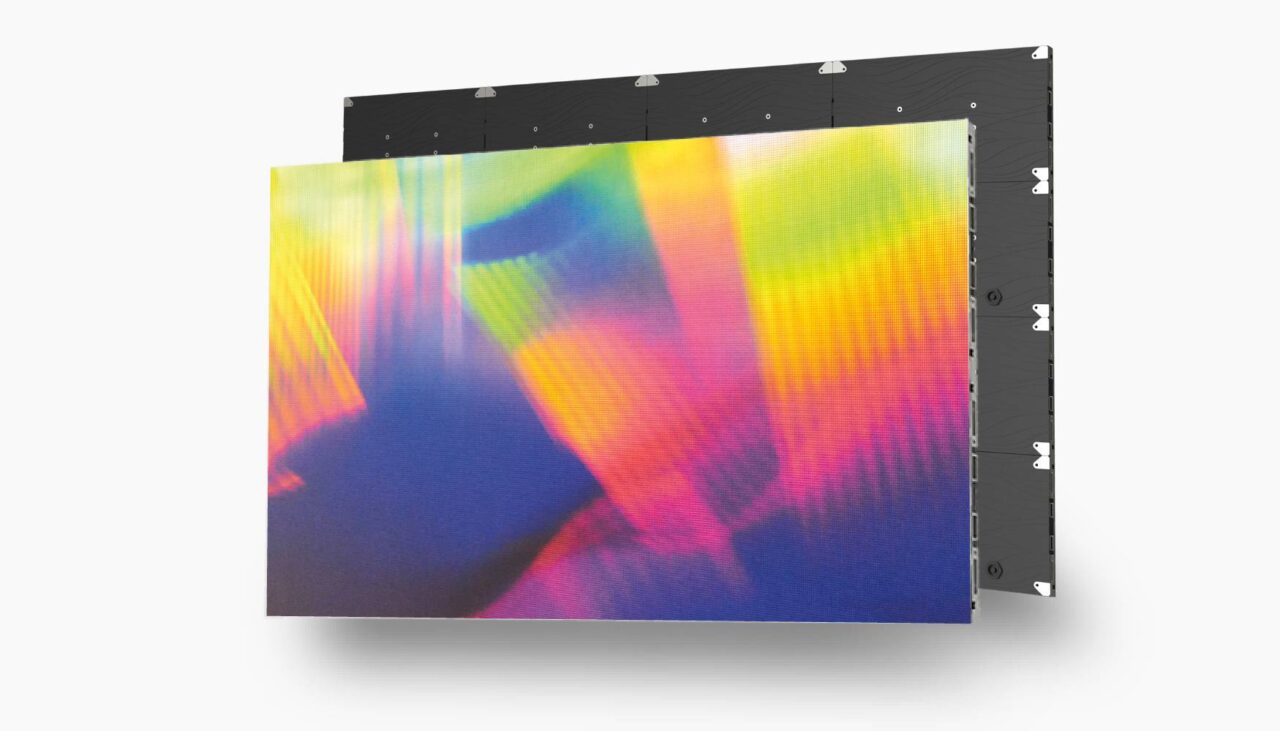
Showcased at Integrate in Sydney, the new Panasonic DvLED solution uses 55-inch, 16:9 cabinets with a 1.26 mm pixel pitch and 800 cd/m² brightness. It has also been designed around VESA-compatible mounting and front-access servicing. Panasonic integrates the display control system into the product, allowing content to be connected through HDMI without requiring a separate external video-wall controller.
For schools and offices with an ageing LCD video wall, these practical details may be just as relevant as the display specifications.
What Is Direct-View LED?
Direct-view LED is a display technology in which the individual LED modules themselves produce the image. Unlike a conventional LCD video wall, there is no LCD panel with a bezel surrounding each screen.
This allows multiple LED cabinets to form a continuous display without the visible lines between individual LCD panels that are characteristic of tiled LCD video walls.
For applications where content needs to remain clearly visible across a large surface, this can be useful. A school may use a large display for assemblies, events or presentations, while an office may use a video wall for presentations, collaboration, corporate communications or digital signage.
The suitability of DvLED still depends on the room, viewing distance, content and required screen size. However, the absence of conventional LCD bezels can be useful where content needs to extend across the display area without the interruption created by individual screen frames.
A 55-Inch Format Designed for Video Wall Applications
One of the more distinctive aspects of Panasonic’s new DvLED solution is its 55-inch cabinet format.
Each cabinet is designed around a 55-inch 16:9 format, with Panasonic specifying a 1.26 mm pixel pitch and 800 cd/m² brightness. The pixel pitch describes the distance between the centres of adjacent LED pixels, with a smaller pitch allowing pixels to be positioned more closely together.
Brightness is another consideration when selecting a display. Panasonic rates this DvLED solution at 800 cd/m², which is relevant when considering installations in environments with significant ambient light.
These specifications should be considered alongside the room itself. A boardroom, school auditorium, foyer or multipurpose room can have very different lighting conditions and viewing distances.
For organisations planning a new display, the appropriate DvLED configuration should therefore be determined by the intended application, viewing distance, ambient lighting and content requirements.
Designed to Make Video Wall Upgrades More Practical
Replacing an ageing video wall is not necessarily as simple as removing the old displays and installing new ones.
Mounting infrastructure, wall construction, cabling, signal distribution and control equipment can all form part of an existing installation. Changing one component can sometimes create requirements for changes elsewhere in the system.
Panasonic has addressed one of these considerations with VESA-compatible mounting.
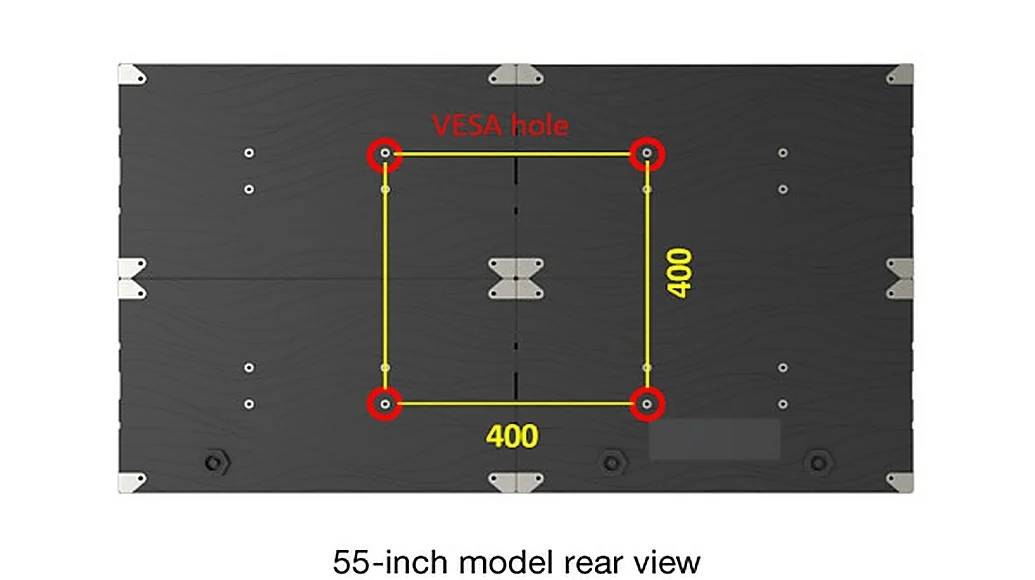
The 55-inch DvLED cabinet uses a VESA 400 × 400 mm mounting arrangement, allowing existing LCD video-wall mounts or brackets to potentially be reused where the existing infrastructure is suitable. This does not mean every existing bracket will automatically be compatible. The mounting system, wall structure, dimensions, load requirements and existing installation should still be assessed before an upgrade proceeds.
For schools and offices, this can provide greater flexibility when planning a replacement. An AV integrator can assess the existing installation to determine what infrastructure can remain and what needs to change.
Integrated Control for a More Straightforward Setup
Another notable feature is Panasonic’s integrated control architecture.
Traditional video wall installations can involve additional processors or controllers to distribute and manage content across multiple displays. Panasonic’s DvLED wall incorporates the control system into the display, supporting HDMI connectivity and HDMI daisy-chain operation.
This can simplify the overall system design by removing the need for a separate external video-wall controller in supported configurations.
For an IT Manager, fewer external control components can also mean fewer pieces of equipment to account for when documenting and maintaining an AV system. For a school or business, it can provide a straightforward installation where advanced external video processing is not required.
The appropriate control approach will still depend on the requirements of the particular installation. Panasonic’s integrated design provides an option for applications where a separate video-wall processor is unnecessary.
Front-Access Servicing Can Help With Maintenance
Maintenance is another consideration that can become increasingly important as an AV installation ages.
Panasonic’s DvLED wall uses front-access servicing, allowing LED modules and key components to be accessed from the front of the display. Panasonic identifies front access for module, power supply and board servicing as part of the design.
This can be particularly useful for displays installed directly against a wall, where accessing the rear of the display may be difficult or disruptive.
For a school, this may be relevant in a multipurpose space that is regularly used for assemblies, performances or community activities. In an office, it can be useful where meeting rooms, reception areas or collaboration spaces need to remain operational.
Maintenance requirements will always depend on the installation and the nature of the fault, but front access provides technicians with a practical way to reach serviceable components.
Designed for Professional Applications
Panasonic specifies the DvLED wall for 24/7 operation, with its LED modules rated for up to 100,000 hours to half brightness. The system also uses Flipchip COB LED technology, which Panasonic identifies as providing greater robustness for professional display applications.
For schools and businesses, these specifications are relevant because professional AV displays may need to operate for extended periods rather than being switched on only for occasional presentations.
The 100,000-hour figure should not be interpreted as a guaranteed lifespan for the complete display. It refers to the LED module’s rated brightness half-life under the specified conditions.
As with any professional AV equipment, actual operating life and performance can be influenced by installation conditions, operating settings, usage and maintenance.
Where Could a Direct-View LED Wall Be Used?
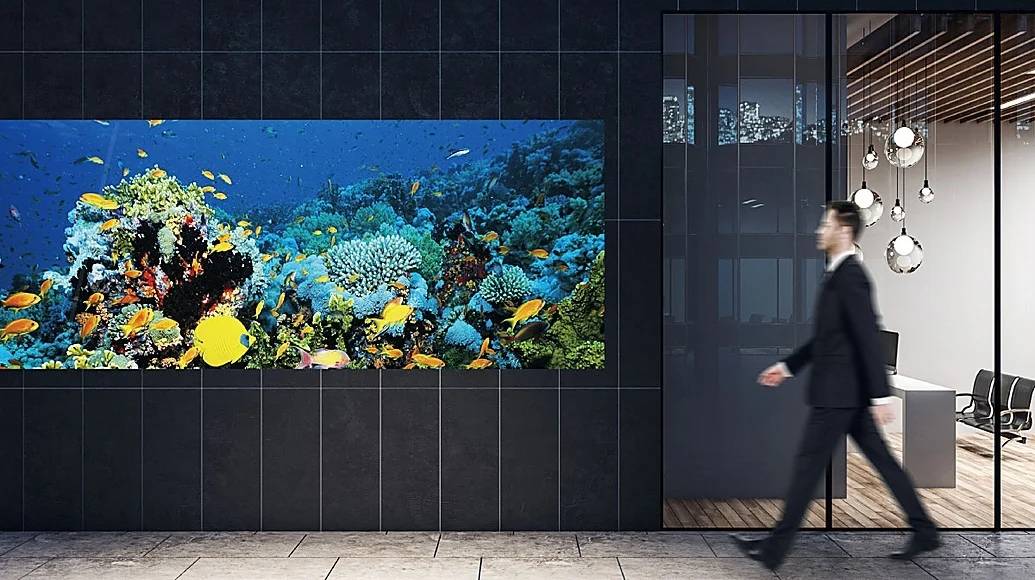
DvLED can suit a range of professional environments, but the appropriate application depends on the requirements of the space.
Schools
In education environments, a large seamless display could support assemblies, presentations, performances, events and shared learning spaces.
A video wall in a school hall, performing arts venue or multipurpose room may need to remain visible from different parts of the room while supporting a mixture of presentations, video and graphics.
The seamless format can also be useful where content needs to extend across the entire display area without the interruption of conventional LCD bezels.
Offices
Corporate environments can use large-format displays for presentations, collaboration, corporate communications and reception or public-facing information.
In meeting and collaboration spaces, HDMI connectivity provides a familiar connection method, while the integrated control architecture can simplify the overall system where a separate video-wall controller is not required.
Foyers and Shared Spaces
A large display can also be used to communicate information in areas such as school reception spaces, corporate foyers and other shared environments.
Here, brightness and image consistency can be important considerations, particularly where the display is installed in a space with significant natural or artificial ambient light.
Is DvLED the Right Choice for Every Video Wall?
Not necessarily.
The decision between DvLED, LCD video wall displays, large-format professional displays and projection should be based on the environment and the intended use.
Factors such as viewing distance, room size, ambient lighting, content type, screen dimensions, mounting requirements, budget, maintenance access and existing AV infrastructure should all be considered.
For an organisation replacing an existing video wall, the condition of the current mounting system and signal infrastructure should also be assessed before deciding what can be retained.
This is where professional AV planning becomes important. A product specification can indicate what a display is capable of, but the installation determines how effectively that technology will work within the space.
A Practical Approach to Video Wall Upgrades
Panasonic’s new DvLED wall brings together a 55-inch 16:9 cabinet format, 1.26 mm pixel pitch, 800 cd/m² brightness, VESA-compatible mounting, front-access servicing and integrated control.
For organisations considering an ageing video wall, these features provide several practical considerations when assessing whether DvLED is appropriate for the space. Existing infrastructure may be reusable following a technical assessment, while the integrated control and front-access design can simplify aspects of installation and ongoing service.
As with any AV upgrade, the right solution depends on the room, existing infrastructure and intended use.
If your school or organisation is considering replacing an ageing video wall, D.I.B. Audio Visual can assess the existing installation and help determine whether a direct-view LED solution is appropriate for the space. Our team can consider mounting, connectivity, control and ongoing service requirements alongside the display itself.
Talk to D.I.B. Audio Visual on 03 9457 4800 or email info@dibaustralia.com.au to discuss your video wall requirements.